
Referees: the invisible pressure of a role nobody really understands
Referees never win. Make the right call and nobody notices. Make the wrong one and everyone knows.
And when you're a woman, the bar is even higher.
This is one of the most exposed roles in sport, and one of the least supported. Athletes have mental performance coaches, support staff, entire teams behind them... The referee is alone on the field. And often alone afterward, too.
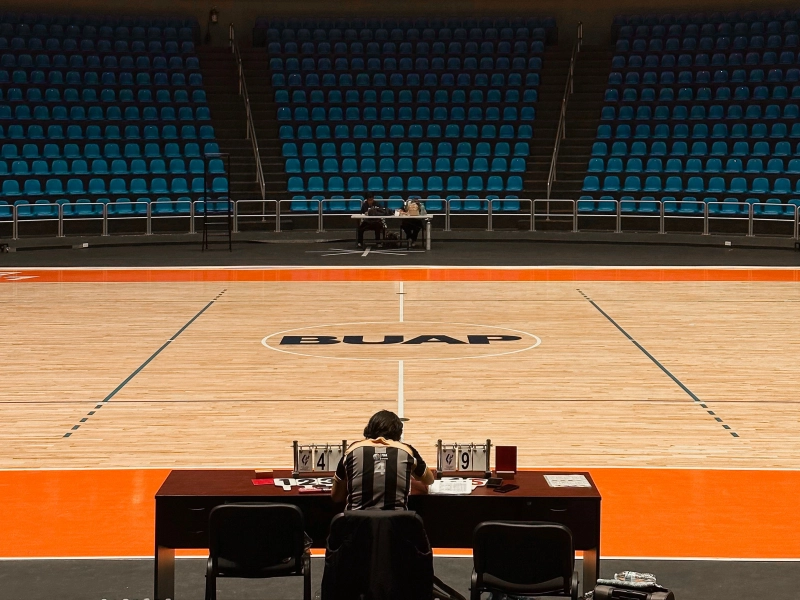
Neither side, no camp
Referees don't belong to anyone. Not the home team, not the away team, not the stands. They're there to enforce the rules; and everyone can turn on them at any moment.
This structural isolation is particular. It's not accidental, it's built into the role. But it has a cost.
Sports culture values resilience. For referees, it sometimes edges into silence. You don't talk about what it costs. You keep going...
Real-time decisions: what the brain can take
A referee makes hundreds of decisions per game, in seconds, with no going back. This, in front of everyone.
From a neurological standpoint, this is an intense demand on the prefrontal cortex - you must know that by now with all my articles haha, it's the region responsible for decision-making, impulse control, and managing uncertainty - This area gets tired. Over a long game, over a packed season, it starts operating in degraded mode.
Result: less precise decisions late in a game, increased irritability, difficulty recovering mentally after a mistake... This is not a competence issue, it's cognitive fatigue.
And unlike a player who can rest on the bench, the referee doesn't come off. They're there from start to finish.
Read more
Article: "Mental overload: causes, warning signs & real solutions. THE Complete Guide" (the mechanisms of cognitive fatigue explained in detail)
Verbal abuse and the pressure of hostility
This is a reality of the field that many minimize (until they live it). Insults, challenges, sometimes threats... Live, in front of everyone!
The brain doesn't distinguish between a physical threat and an intense verbal one: the amygdala fires, cortisol rises, the body goes into survival mode.
Over time, repeated exposure to this kind of stress produces the same effects as any chronic stress situation: hypervigilance, sleep disruption, post-game rumination, loss of enjoyment...
And the unspoken rule in officiating culture, don't show that it gets to you, makes things worse. What isn't expressed doesn't disappear, it accumulates.
Being a woman referee: an extra layer of pressure
Women referees deal with everything described above, and something else on top of it.
Legitimacy constantly questioned, comments about being a woman in a still very male-dominated space, having to prove twice as much to be taken seriously...
But also managing reactions when a call goes against someone, reactions that sometimes take on a dimension they wouldn't with a male official.
It's an additional load, cognitive and emotional, that women referees carry on top of the weight of the role itself.
In sessions, this comes up often. Not as a statement, as fatigue; the tiredness of constantly having to justify your presence, on top of doing the job...
What actually helps
Officiating doesn't happen in a bubble. What happens on the field stays with you: in the body, in the mind, sometimes long after the final whistle.
- Debrief differently than alone. Most referees analyze their games technically (the calls, the mistakes, the angles...). But the emotional side often goes unprocessed. Having a space to talk about what it produced changes recovery!
- Work on the relationship with error. A bad call stays visible, recorded, commented on. How you handle it mentally afterward is what separates a referee who grows from one who shuts down.
- Build stable internal resources, ones that don't depend on the judgment of the crowd, the players, or the media. That's deep work (and it's exactly where coaching comes in).
Read more
Article: "Fear of failure in athletes: when preparation becomes anxiety" (the relationship to error and performance under pressure)
To close
Referees are at the heart of sport. Without them, nothing happens. And yet they're usually the last ones anyone thinks about when it comes to mental preparation.
Not because the pressure is less; it's because the culture of officiating doesn't leave much room to admit it.
That's changing, slowly... And referees who work on their mental game don't become more fragile, they become more solid ;)
What's next?
If this article helped you gain a bit more clarity, you can take the reflection further.
Book your discovery call: free and no commitment
If you have a question, a hesitation or need clarification, I will answer with clarity and transparency.
Contact me directly
If you have a question, a hesitation or need clarification, I will answer with clarity and transparency.